
ATHENA: GODDESS OF WISDOM AND WAR
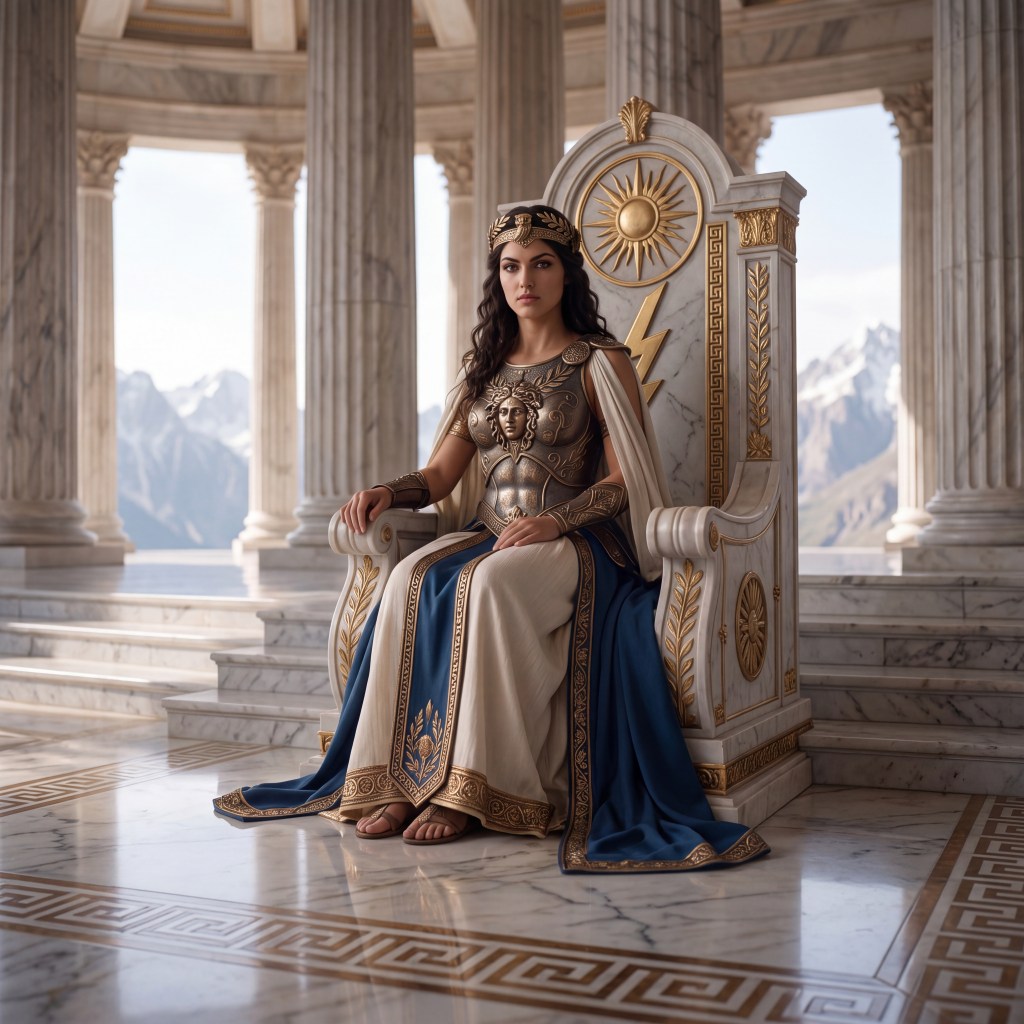
Athena is the daughter of Zeus and Metis and one of the most powerful goddesses of the Olympian generation. She is associated with wisdom, strategic warfare, skilled craftsmanship, civic order and the protection of cities—especially Athens, the city that bears her name.
Unlike gods who represent uncontrolled violence, Athena’s power is built around intelligence, discipline and calculated action. In Homer she repeatedly guides heroes, restrains destructive impulses and helps shape plans rather than simply overpowering enemies.
ATHENA AT A GLANCE
Parents: Zeus and Metis
Siblings: Numerous children of Zeus, including Apollo, Artemis, Ares, Hermes and Persephone
Role: Goddess of Wisdom and Strategic War
Domain: Wisdom, strategy, warfare, crafts, civic protection
Seat of Power: Mount Olympus and Athens
Symbols: Aegis, owl, olive tree, helmet, spear
Roman Name: Minerva
Major Children: None
BLOODLINE & FAMILY
Athena’s mother is Metis, whom Hesiod describes as exceptionally wise. When Metis becomes pregnant, Zeus swallows her after being warned that she could eventually bear a son powerful enough to challenge his rule.
Athena is later born from Zeus himself, emerging as a fully formed divine daughter associated from the beginning with intelligence and martial power.

POWER & AUTHORITY
Athena represents intelligent power. She is a goddess of warfare, but her strength lies especially in strategy, disciplined combat, planning and judgment rather than uncontrolled violence.
Her authority also extends to skilled work, craftsmanship and the protection of cities. The Homeric Hymn to Athena calls her inventive, courageous and a saviour of cities, bringing together her intellectual, military and civic identities.
ATHENA IN THE ANCIENT SOURCES
In the Iliad, Athena appears at a critical moment when Achilles is about to draw his sword against Agamemnon. She comes from Olympus and stops him, demonstrating her association with self-control and calculated action.
In the Odyssey, Athena becomes one of Odysseus’s most important divine allies. She openly describes herself as famed among the gods for wisdom and craft and works with Odysseus to plan his return and recovery of his household.
MOST FAMOUS MYTHS
The Birth of Athena — Athena emerges from the head of Zeus already associated with divine intelligence and warfare. The Contest for Athens — Athena and Poseidon compete for Attica; Athena presents the olive tree and becomes the city’s patron goddess.
The Trojan War — Athena repeatedly intervenes in the conflict and supports favored Greek heroes. Odysseus — she becomes his protector, adviser and strategic partner throughout the Odyssey.
WHAT ATHENA LOOKED LIKE
Homer repeatedly calls Athena bright-eyed or flashing-eyed, depending on the translation, and the Homeric Hymn to Athena presents her wearing brilliant divine armor and carrying a spear. Ancient art commonly emphasizes her helmet, spear and aegis.
THE CYCLE OF DIVINE RULE
Athena’s birth connects directly to the ancient cycle of fathers fearing the children who may replace them. Uranus fears his descendants. Cronus swallows his children. Zeus himself later receives a warning involving Metis and the children she might bear.
Instead of allowing the prophecy to unfold in the same way, Zeus swallows Metis. Athena is nevertheless born, but Hesiod describes her as equal to her father in strength and wise understanding, while the feared future son never emerges.
After Zeus survives and the swallowed children are released, the younger gods defeat the Titans and establish the Olympian order. Hera emerges from that struggle not simply as Zeus’s sister, but eventually as queen beside the ruler of Olympus.
ATHENA — WISDOM IN ARMOR
Athena’s combination of wisdom and warfare makes her very different from a simple battle goddess. When Achilles is on the verge of killing Agamemnon in the opening book of the Iliad, Athena does not encourage the attack. She stops him and persuades him to control his anger.
The same intelligence defines her relationship with Odysseus. When they reunite in Ithaca, Athena recognizes in him the mortal quality closest to her own: planning, intelligence and strategic deception.
Later Greek tradition preserves the famous contest between Athena and Poseidon for Attica. Poseidon strikes the Acropolis with his trident, while Athena plants an olive tree.
The territory is awarded to Athena, establishing her as the divine patron of Athens. The olive therefore becomes one of her most recognizable symbols alongside the aegis, helmet and spear.
ATHENA IN GREEK MYTH RAP
Greek Myth Rap portrays Athena as strategy made visible. She is a warrior, but she is never appear reckless. Every movement has already considered what happens next.
Her world is disciplined armor, sword, the aegis, spear, intelligent observation and controlled physical confidence rather than rage or brute force.
ANCIENT SOURCES
Homer — Iliad, Book 1, lines 194–220
Athena descends from Olympus and stops Achilles from attacking Agamemnon, showing her connection with restraint and strategic judgment.
Homer — Iliad
Athena appears repeatedly throughout the Trojan War as one of the most active Olympian gods involved in the conflict.
Homer — Odyssey, Book 1
Athena advocates for Odysseus and begins guiding Telemachus.
Homer — Odyssey, Book 13, lines 287–330
Athena reveals herself to Odysseus in Ithaca and explicitly connects herself with wisdom, craft and strategic planning.
Hesiod — Theogony, lines 886–900
Describes Metis, Zeus’s decision to swallow her and the prophecy surrounding Athena’s birth.
Hesiod — Theogony, lines 924–929
Describes Zeus giving birth to bright-eyed Athena from his own head and emphasizes her martial nature.
Homeric Hymn to Athena 28
Celebrates Athena as bright-eyed, inventive, courageous, a protector of cities and a goddess born from Zeus in shining armor.
Pseudo-Apollodorus — Library, 3.14.1
Preserves the later Greek tradition of Athena’s contest with Poseidon for Attica and her gift of the olive tree.
Pausanias — Description of Greece, 1.24–1.27
Records monuments, cult traditions and physical reminders of Athena’s connection with Athens and the Acropolis.
Greek mythology survives in multiple traditions. Greek Myth Rap distinguishes early Homeric and Hesiodic material from later Greek and Roman retellings when versions differ.

