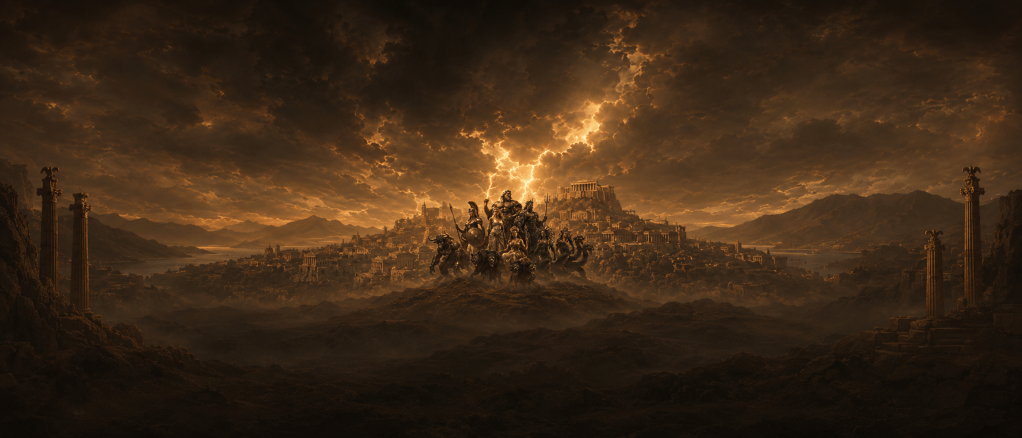
ZEUS: KING OF THE OLYMPIAN GODS
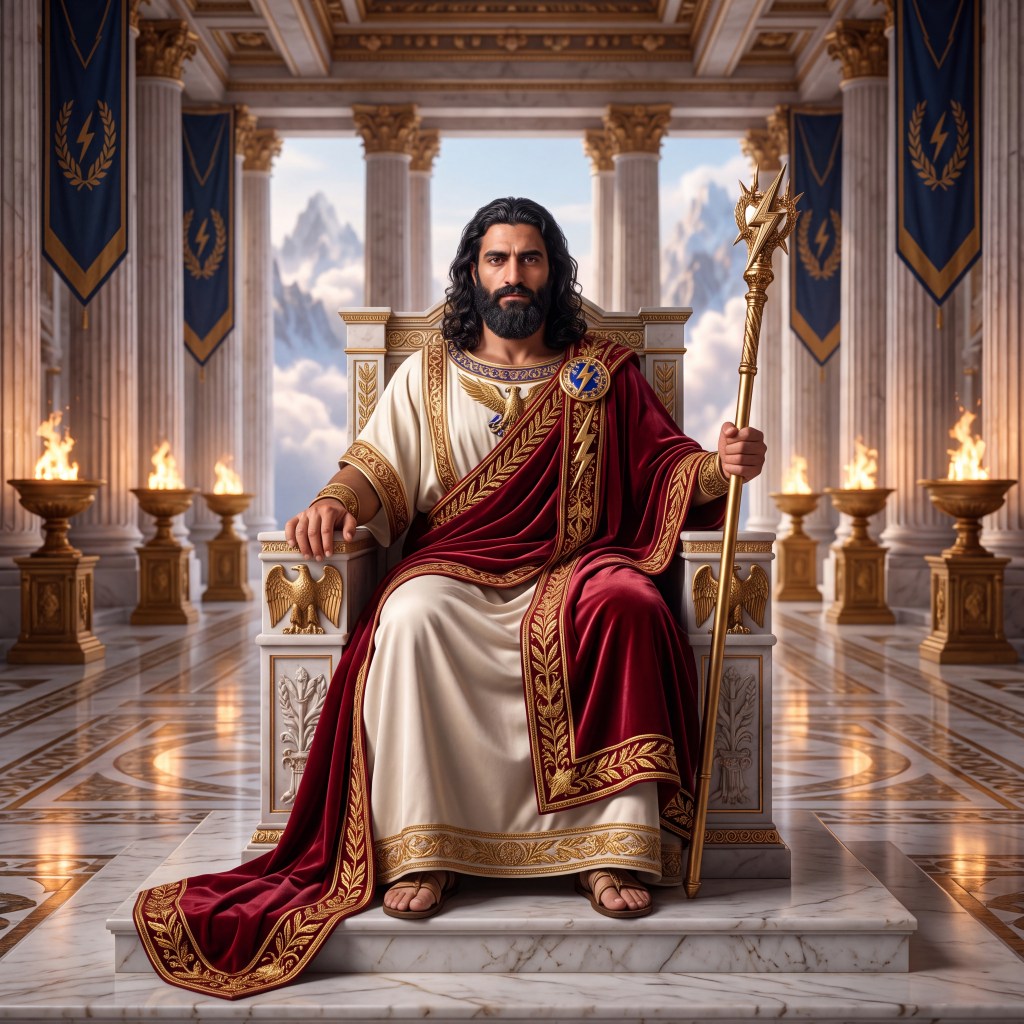
Zeus stands at the center of the Olympian order: son of Cronus and Rhea, brother of Hera, Poseidon, Hades, Demeter and Hestia, wielder of the thunderbolt, and king of gods and men. But the oldest Greek stories present him as more than a storm god. Zeus is a ruler, judge, strategist, oath-keeper and political force whose decisions shape the lives of gods and mortals alike.
His rise begins with rebellion against Cronus, continues through the Titanomachy, and ends with Zeus presiding over a divine court on Mount Olympus. In Homer, he commands the gods during the Trojan War. In Hesiod, he becomes the ruler who distributes honors and authority among the immortals.
ZEUS AT A GLANCE
Parents: Cronus and Rhea
Siblings: Hestia, Demeter, Hera, Hades, Poseidon
Role: King of the Olympian Gods
Domain: Sky, thunder, kingship, divine order
Seat of Power: Mount Olympus
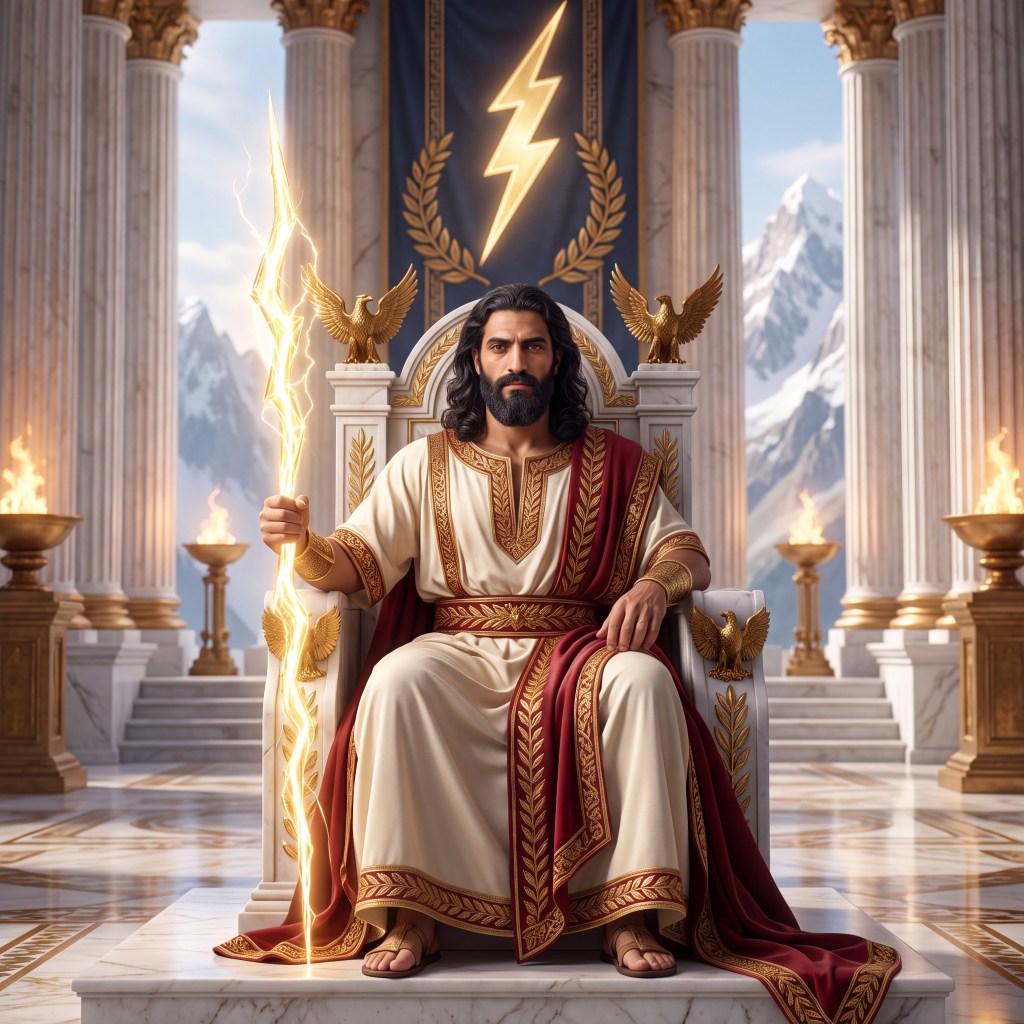
Symbols: Thunderbolt, sceptre, eagle, aegis
Roman Name: Jupiter
Major Children: Athena, Ares, Apollo, Artemis, Hermes, Persephone
BLOODLINE & FAMILY
Zeus is the youngest child of Cronus and Rhea in Hesiod’s genealogy. His siblings form the original ruling Olympian generation. After overthrowing Cronus, Zeus becomes husband of Hera and father of many of the next generation of gods, including Athena, Ares, Apollo, Artemis and Hermes. Through Demeter he is also father of Persephone.
POWER & AUTHORITY
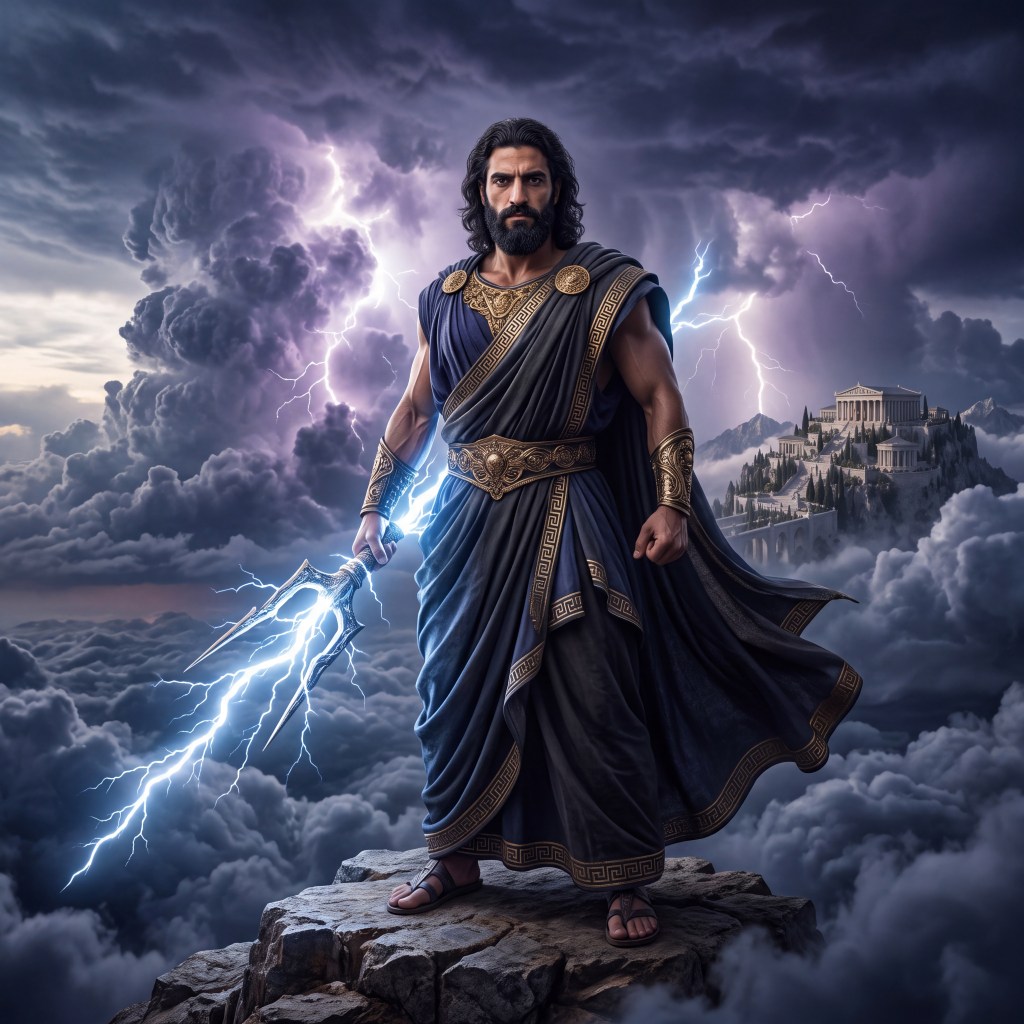
Zeus controls thunder, lightning, storms and the sky, but his greatest power is political. He summons divine councils, issues commands to other gods, enforces oaths and arbitrates disputes. The thunderbolt is his defining weapon, while the sceptre and eagle symbolize kingship. Homer presents Zeus as overwhelmingly powerful, but still required to manage powerful relatives such as Hera and Poseidon.
ZEUS IN THE ANCIENT SOURCES
Homer: Zeus is the active ruler of Olympus during the Trojan War—making bargains, enforcing divine rules and managing rival gods. Hesiod: Zeus is the architect of the new divine order—escaping Cronus, leading the Titanomachy and distributing honors among the gods. Together, Homer and Hesiod give us both Zeus the political king and Zeus the founder of Olympian rule.
MOST FAMOUS MYTHS
Cronus & the Birth of Zeus — Rhea saves him from being swallowed. Titanomachy — Zeus leads the younger gods against the Titans. Athena’s Birth — Athena emerges after Zeus swallows Metis. Prometheus — conflict over sacrifice and fire. Trojan War — Zeus manages competing divine factions. Sarpedon — Zeus struggles between paternal love and the larger order of fate.
WHAT ZEUS LOOKED LIKE
Homer gives Zeus dark brows, substantial divine locks and a mature kingly presence. The oldest poetry does not provide an exact eye color, height or permanent outfit. Greek Myth Rap: our Zeus is a mature Mediterranean ruler with thick dark wavy hair, a full beard, powerful build, ivory robe and deep-red royal mantle. His exact face and wardrobe are original GMR visual choices grounded in the ancient descriptions.
THE CYCLE OF DIVINE RULE
Before Zeus ruled Olympus, Greek myth describes a repeating struggle between generations. Uranus feared powerful children and confined some of them. Cronus overthrew Uranus, but then repeated the pattern: he imprisoned dangerous divine powers and swallowed his own children because he feared that one of them would overthrow him.
Zeus becomes the next generation in that cycle. He escapes Cronus, frees his brothers and sisters, gathers allies and leads the war against the Titans. After victory, the defeated Titan faction is confined below, and Zeus establishes the new Olympian order.
The irony is central to the mythology: each ruling generation fears the next. Power creates the fear of losing power. Zeus’s story begins with the same prophecy that haunted Cronus—the son replacing the father.
ZEUS — FROM REBEL TO KING
Zeus begins not as king but as the child Cronus failed to swallow. After growing beyond his father’s reach, he helps free his swallowed siblings and becomes the central leader of the younger divine coalition.
The struggle with the Titans lasts for years before Zeus gains the allies and weapons needed to break the old order. The Cyclopes provide the thunderbolt, while the Hundred-Handers become overwhelming battlefield allies.
Victory transforms Zeus from the hidden son of Cronus into ruler of Olympus. His reign is therefore built not only on strength but on alliances, rewards and the organization of a new divine hierarchy.
ZEUS IN GREEK MYTH RAP
Greek Myth Rap portrays Zeus as a mature Mediterranean ruler rather than an elderly fantasy wizard. He has dark flowing hair, a full beard, powerful build and the controlled presence of a king who expects to be obeyed.
His stories give us several future music and video directions: the overthrow of Cronus, the Titanomachy, Athena’s birth, the politics of Olympus and the Trojan War.
ANCIENT SOURCES
Homer — Iliad
Zeus appears as king of the gods and political ruler of Olympus, directing divine intervention during the Trojan War, negotiating with Hera and Poseidon, and asserting his authority over the other gods.
Hesiod — Theogony
The primary early source for Zeus’s birth, Cronus and Rhea, the Titanomachy, the defeat of the Titans, Zeus’s rise to kingship, and the genealogy of the Olympian gods.
Homeric Hymns
Preserve additional early Greek traditions surrounding Zeus, the Olympian family, divine honors, and the gods connected to his rule.
Herodotus — Histories
Provides later historical perspective on Greek religion and famously identifies Homer and Hesiod as foundational poets who helped establish the Greeks’ understanding of the gods and their genealogies.
Pausanias — Description of Greece
Records temples, sanctuaries, statues, cult practices and local traditions connected with Zeus throughout the Greek world.
Greek mythology was preserved in multiple traditions. Greek Myth Rap distinguishes early Greek poetry AND later Greek and Roman retellings when versions differ as well as our music direction. Sometimes we intertwine all three.

